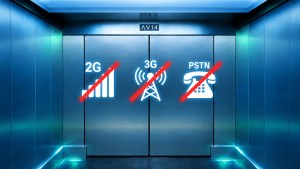
With millions of lifts in operation across Europe, modernization is becoming an increasingly important priority. As traditional telecom networks – PSTN/2G/3G – are phased out, providers of lift communication devices and systems face the challenge of introducing modern IP-based communication capabilities to an installed base that was built and designed for analog networks and communication technologies.
Europe has an estimate of 6.85 million lifts in operation, according to the European Lift Association (ELA). As this installed base ages, maintaining and modernizing existing lifts are becoming an increasingly important priority for the industry.
The trend is reflected in Roland Berger’s Elevator Market Outlook 2030, which forecasts annual growth of 6% in Europe’s lift modernization market between 2024 and 2030.
While new lift installations remain important, growing attention is being directed toward adding modern IP-based communication capabilities to lift devices and systems already in service, thereby extending their life.
Modernizing a lift communication system does not necessarily mean replacing the entire installation.
In its report On the Up: Elevator Modernization, Roland Berger highlights a growing preference for partial modernization. Rather than undertaking complete replacements, building owners and operators are increasingly choosing targeted upgrades that address specific needs.
Cost sensitivity is one important driver. Replacing an entire lift communication system will require investment, possibly also including hardware installation. Reducing downtime is another consideration, particularly in buildings where uninterrupted lift availability is essential. Sustainability also plays a role, as extending the life of existing lift equipment such as alarm panels, communication equipment and emergency phones can help avoid unnecessary replacement.
Introducing new functionality must preferably be added alongside existing components, rather than through a completely new installation. For providers of lift communication devices and systems this means that retaining existing equipment is often a priority in modernization projects.
Alongside the aging lift installed base, the telecommunications landscape is undergoing a significant transition. Traditional telecom network technologies, including PSTN, 2G and 3G, are being phased out in many markets.
For more on what this transition means for lift emergency communication, read our blog post: Is your lift emergency communication ready for the 2G, 3G and PSTN closing?
For providers of lift communication devices and systems, addressing the modernization challenges and requirements can involve considerable development work.
Introducing modern communication capabilities such as implementing SIP/VoIP functionality, supporting multiple alarm protocols and integrating with different alarm management platforms all require specialist communication expertise. Developing and maintaining these capabilities entirely in-house can consume resources that might otherwise be dedicated to the provider’s core products.
By integrating cloud-based communication capabilities into existing lift communication systems, providers can support the transition toward IP-based communication without necessarily rebuilding their systems from the ground up.
For example, cloud services can provide SIP/VoIP functionality and alarm protocol conversion, helping connect existing lift communication devices with modern communication infrastructure and alarm management systems.
At iotcomms.io, we help providers of lift communication devices and systems add modern communication capabilities to their existing solutions through cloud-based services and communication APIs.
Our alarm, voice and video cloud services and SaaS delivery model are designed to simplify development and operation, provide interoperability between lift emergency equipment and alarm management systems, and enable modern voice and video communication capabilities.
By integrating these services into existing lift communication systems, providers can:
Add SIP/VoIP communication capabilities without developing the complete communication infrastructure in-house.
Add support for lift alarm protocols ensuring interoperability with alarm management systems.
Enable existing lift emergency communication systems to communicate over IP networks.
Reduce development complexity and modernize faster.
This allows lift communication system providers to build on their existing technology, focus development resources on their core products and introduce new capabilities more efficiently.